Your website is live. Your contact details are correct. The pages look good.
So, is there anything left to check?
Actually, yes.
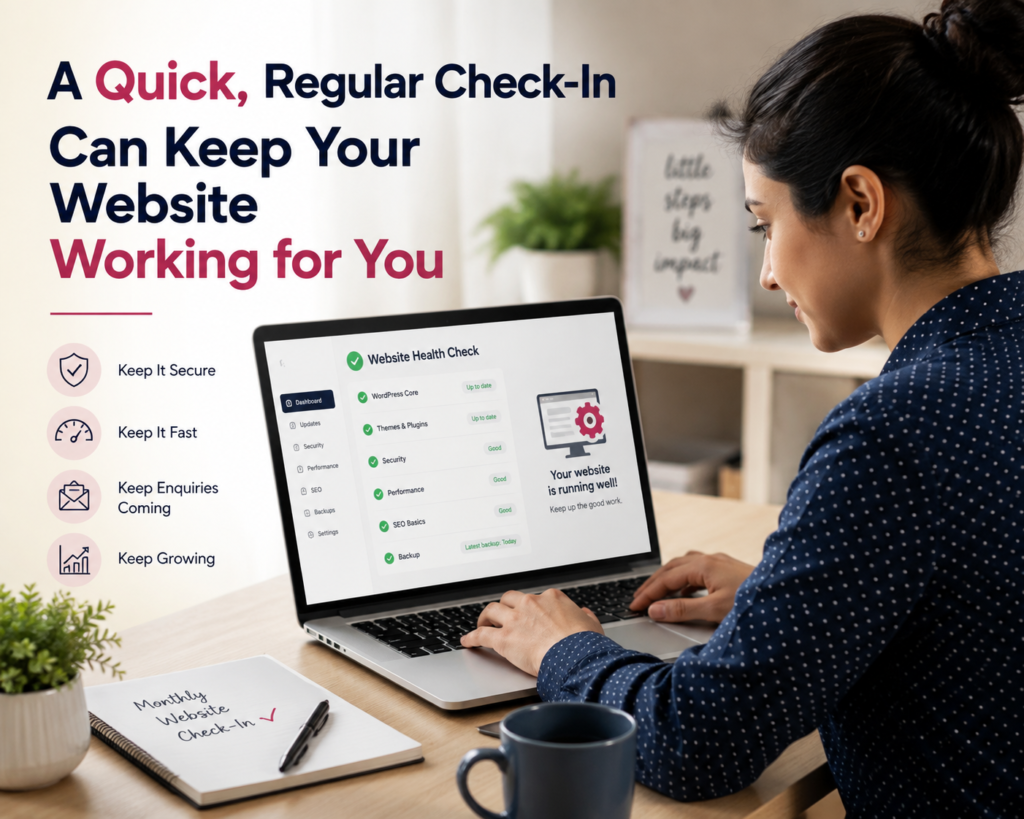
You don’t need a full website audit every month. But a quick check of the basics can help you catch small problems before they affect visitors and enquiries. It also supports your organic marketing efforts by keeping your website active, accurate, accessible and useful when people find you through search or other online channels.
Think of it as a quick health check for your website.
- Start With Your Contact Form
This is one of the most important checks.
Submit a test enquiry through your website’s contact form and make sure:
- The form accepts the submission.
- You receive the enquiry email.
- The visitor receives the expected confirmation message.
- The email is reaching the correct person or inbox.
- Required fields and drop downs are working properly.
A website can look perfectly fine while its contact form quietly stops sending enquiries.
And if a potential customer fills in your form but nobody receives it, you may never even know that you lost a lead.
- Click Your Buttons
Spend a couple of minutes clicking through the important buttons and links on your website.
Check your:
- Contact Us button
- Call button
- WhatsApp button
- Email link
- Enquiry buttons
- Product or service links
- Social media links
- Download buttons
- Navigation menu
Don’t assume that because a button worked when the website was launched, it will always work.
A page may have moved. A URL may have changed. A plugin may have been updated. A third-party service may have changed something.
Your visitors don’t know what went wrong. They simply see a button that doesn’t work.
- Look at Your Website Like a Customer
Don’t just check whether the pages load. Actually read them.
Ask yourself:
Is the information still correct?
Has your phone number changed?
Are your services still the same?
Are the prices, locations, team information or business hours still accurate?
Is there an old promotion still sitting on the homepage?
Are there services you no longer provide?
Even small outdated details can make a business look inactive.
Your website is often one of the first places a potential customer goes to understand whether your business is current and trustworthy.
- Check Your Latest Content
If you publish blogs, news, projects, case studies or updates, look at your latest content.
Make sure:
- New pages are published correctly.
- Images are loading.
- Headings look right.
- Links work.
- Dates are correct.
- Content is easy to read on mobile.
- New content is connected to relevant pages on your website.
You don’t necessarily need to publish something new every week.
But when you do publish, make sure it actually works and contributes something useful to your website.
- Don’t Forget Mobile
Open your website on your phone.
This simple step is often missed when checking a website from a desktop computer.

Scroll through a few important pages.
Check whether:
- Text is readable.
- Images fit properly.
- Buttons are easy to tap.
- Menus open correctly.
- Forms are usable.
- Nothing is cut off or overlapping.
For many businesses, your customer’s first visit may happen on a mobile device.
A website that works well on desktop but frustrates mobile users can quickly lose potential enquiries.
How Does This Help Organic Marketing?
Organic marketing isn’t only about posting on social media or adding keywords to a blog.
Your website is the destination where much of that marketing eventually leads.
You may share a LinkedIn post, publish an Instagram update, write a blog or appear in Google search results. But when someone clicks through to your website, the website needs to be ready.
Regular checks help you maintain a website that is:
Accessible – visitors can reach the information and contact you.
Current – your business information reflects what you actually offer.
Useful – content answers real customer questions.
Active – new and updated content gives visitors and search engines more relevant information to discover.
Trustworthy – working links, accurate information and a professional experience build confidence.
Search engines don’t simply reward a website because it exists. Your overall website quality, useful content, accessibility, technical health and user experience all contribute to how effectively your online presence can support organic discovery.
Your Monthly Website Routine
You can make this extremely simple:
Test 1: Test your contact form and enquiry emails.
Test 2: Click important buttons, links and menus.
Test 3: Check your homepage and key service pages for outdated information.
Test 4: Check your latest blog or content and make sure everything displays correctly.
Test 5: Open the website on your phone and check the basic mobile experience.
That’s it.
You don’t need to become a web developer.
You simply need to spend a few minutes experiencing your website the way your customers do.
A Website Is Not a “Set It and Forget It” Asset
Launching your website is only the beginning.
Your business changes. Your customers’ needs change. Technology changes. Links change. Content becomes outdated. And sometimes, something simply stops working.
A small monthly check can help you catch these issues early.
This quick checkup today could prevent a missed enquiry tomorrow.
And more importantly, it helps ensure that the website you’re promoting through your organic marketing is actually ready to receive the attention you’re working so hard to generate.
Keep Your Website Ready for Your Next Customer
At ActiveLink Web Design, we believe website maintenance should be practical, consistent, and proportionate to your business needs. As a website development company in Dubai and an organic marketing strategist for SMEs in Dubai, we help businesses keep their websites functional, relevant, accessible and aligned with their marketing goals. Because your website shouldn’t just be online—it should continue to support your business long after it is launched.