
Dubai has a growing community of life coaches, wellness practitioners, yoga teachers, relationship coaches, business coaches and specialists working in areas such as mindset, money, lifestyle and personal growth.
Many of them are already active on Instagram and YouTube. They share advice, record videos, conduct live sessions, post client feedback and talk about subjects they are passionate about.
Social media is an important part of building a coaching practice. It helps people discover your work and get a sense of your personality and approach.
But when someone becomes genuinely interested in working with you, they often want to know more.
This is where a website can add real value.
Your website can bring your work together
A potential client may discover a coach through an Instagram post or YouTube video. They may then want to know about the coach’s background, services, approach, programmes and experience.
A website gives them one place to find this information.
It can bring together your introduction, coaching services, client testimonials, articles, videos, workshops and contact details. Instead of searching through months of social media posts, visitors can explore your work in a way that is easy to follow.
For a coach, this also means having control over how the story is presented.
A yoga or wellness practice can have many sides
Consider a yoga teacher working in Dubai.
Their Instagram may show classes, short practices, wellness tips and everyday moments. Their YouTube channel may have guided sessions.
A website can bring the different parts of the practice together.
There could be separate sections for private yoga, group classes, corporate sessions, retreats, workshops or online programmes. The coach can also explain their training, experience and approach, and introduce the kind of clients or organisations they work with.
This is particularly useful when the work goes beyond regular yoga classes.
The same applies to a wellness coach. Their work may include lifestyle, movement, stress management, sleep or mindfulness. A website allows each area to be explained properly, rather than trying to fit everything into a short social media profile.
Business coaches have a different story to tell
A business or executive coach may have years of experience in management, entrepreneurship or a particular industry.
For this type of coach, a website can provide space to explain that experience and the areas in which they work.
For example, the site could have information about leadership coaching, founder coaching, career development, team programmes or workshops.
It could also include articles and videos on subjects the coach regularly discusses.
This gives a prospective client a chance to understand the coach’s thinking before making an enquiry.
A similar approach works for money coaches. Someone who talks about spending habits, financial confidence or money patterns can use their website to explain these areas in greater detail and share useful articles or videos.
Your story matters
People often choose a coach because they connect with the person behind the service.
Perhaps you moved from a corporate career into wellness. Perhaps years of running a business led you towards coaching. Perhaps your own experience with yoga, relationships or personal development influenced the work you do today.
Instagram gives you limited space to tell that story.
A website can have a proper About page where you can talk about your background, training, experience and the reasons behind your work.
Good photography, a well-written introduction and a few carefully selected details can make this page feel personal without becoming a long biography.
The website should feel like you
There is no single design that works for every coach, and a good website design and development company in dubai knows it well; they will design your website as per your brands requirement.
A yoga or wellness practitioner may prefer a calm and spacious website. A relationship coach may choose something warm and personal. A business coach may need a more professional and structured presentation.
The important thing is that the website should reflect the person and the work behind it.
Good photographs, clear information, simple navigation and an easy way to enquire or book a session can make a significant difference to the overall experience.
If you are considering a website for your coaching practice, take a look at some of our recent website projects.
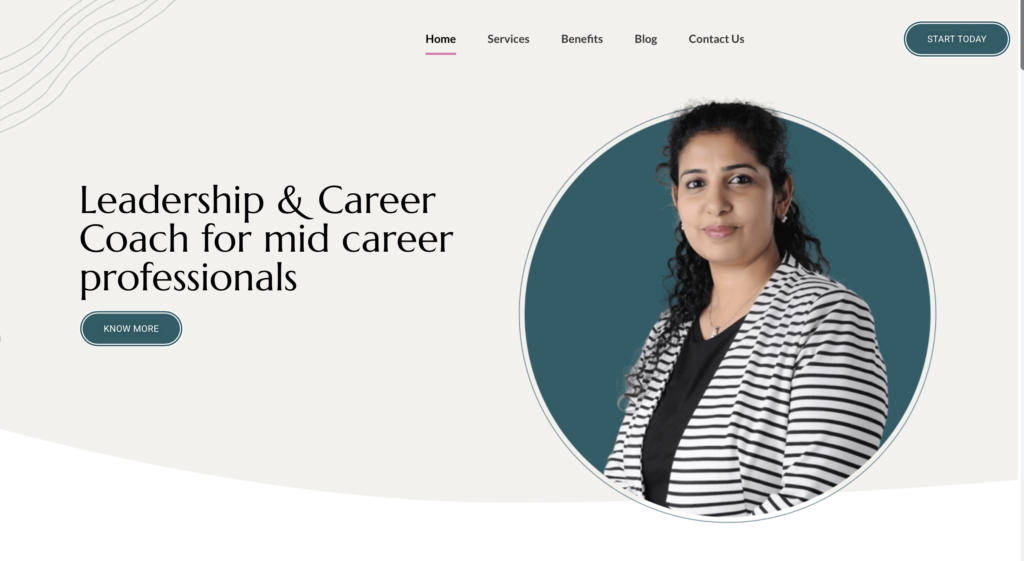

Your website can become the place where your brand grows
You may begin with five pages: Home, About, Coaching, Resources and Contact.
Also provide links to your Instagram and YouTube, so the platforms support each other.
Over time, your website can grow with your business.
Add blogs, add workshops, add testimonials, add a booking system, add videos and podcasts.
The important thing is that your website grows as your coaching practice grows.
Because a coaching business is not only about the sessions you deliver.
It is also about the ideas you share, the community you build, the experience you create and the trust you develop over time.
Social media may be where someone first discovers you.
But your website can give that first impression — and give your coaching practice a professional home of its own.